Introduction
This study compares published pricing from SitePal, HeyGen, D-ID, and Soul Machines so you can see what each platform charges and how costs scale as usage grows.
An ‘AI Avatar’, for the purpose of this study, is an interactive animated visual agent that can be engaged in real-time conversation. Some of the brands mentioned here also provide tools for generating and downloading pre-recorded videos of speaking avatars. That use case is outside the scope of this study. We’re focused solely on interactive avatars.
We’ve attempted to represent information clearly and in an unbiased way. Being on the SitePal team we clearly have an agenda, but we believe we would not be promoting our agenda effectively by presenting incorrect or misleading information.
All the data presented here comes from current published information from each of the brands mentioned. In some cases cost figures had to be extrapolated because high-volume pricing was not available. In such cases our estimate uses each provider’s best published rates — footnotes explain the methodology. Another challenge we faced is that different companies use different terminology and metrics to track usage and costs, and some use tokens as an intermediary form of payment. We have done our best to convert everything to common metrics and avoid confusion. If you believe we have erred, or if you have any feedback, we’d appreciate hearing from you at sales@sitepal.com.
What Does Each Platform Charge?
Adding an interactive AI avatar to your website costs anywhere from a few dollars to thousands of dollars per month — depending on the platform and your usage level. A major part of the difference comes down to architecture. Video generated on the server and streamed in real-time to support an interactive conversation is inherently more expensive to deliver and scale than a solution rendered on the client side. We’ve written about this before — so we won’t expand further here.
Here are the published prices from each platform’s pricing page as of June 2026. All prices shown are monthly with annual billing where available.
SitePal — Monthly Rate (with annual plan)
| Plan | Monthly Price | Audio Streams/mo | Minutes (equiv.) | Cost/Min |
|---|---|---|---|---|
| Bronze | $11 | 3,000 | ~1,000 | ~$0.011 |
| Silver | $20 | 8,000 | ~2,667 | ~$0.007 |
| Gold | $38 | 30,000 | ~10,000 | ~$0.004 |
| Platinum | $217 | Unlimited | Unlimited | Flat rate |
SitePal measures usage in “audio streams” — each stream is a single spoken utterance, up to ~60 seconds long. Spoken audios longer than 60 seconds count as multiple streams. Shorter ones, no matter how short, still count as one stream.
Other providers measure usage in “video minutes” (or equivalent), so we’ve converted SitePal’s stream count to minutes for comparison. Based on analysis of actual SitePal usage patterns, average audio stream length is approximately 20 seconds. Using that figure, one video minute is roughly equivalent to 3 audio streams. (For more detail on this methodology, see our earlier blog post: How Much Does It Really Cost to Put an AI Avatar on Your Website?)
Source: sitepal.com/pricing — retrieved June 2026.
HeyGen — LiveAvatar
HeyGen offers both a video creation platform and LiveAvatar, their real-time interactive streaming product. For interactive website avatars, LiveAvatar is the relevant offering. LiveAvatar is hosted separately at liveavatar.com and operates on its own credit system, independent of HeyGen’s video creation plans.
How LiveAvatar credits work:
LiveAvatar offers two integration modes that determine how credits are consumed:
| Mode | What You Provide | Credit Rate |
|---|---|---|
| Lite | You handle all audio (your own LLM and TTS) | 1 credit = 1 min |
| Full | HeyGen handles STT + LLM + TTS + avatar | 1 credit = 30 sec |
The Lite mode is the closest comparison to SitePal’s model — you supply your own language model and text-to-speech, and HeyGen provides the avatar streaming. (SitePal includes built-in speech recognition, and built-in LLM is coming soon.)
LiveAvatar plans:
| Plan | Monthly Price | Credits | Minutes (Lite) | Cost/Min (Lite) |
|---|---|---|---|---|
| Starter | $19 | 150 | 150 | $0.13 |
| Essential | $99 | 1,000 | 1,000 | $0.10 |
| Business | $475 | 5,000 | 5,000 | $0.10 |
Source: help.heygen.com, liveavatar.com — retrieved June 2026.
D-ID — Agents
D-ID offers interactive “Agents” — real-time streaming avatars delivered via WebRTC that can be embedded on websites. D-ID also offers pre-recorded video creation, but we focus here on their interactive streaming product.
API plans (streaming minutes):
| Plan | Monthly Price (annual plan) | Streaming Minutes | Cost/Min |
|---|---|---|---|
| Build | $14.40 | 32 | $0.45 |
| Launch | $35 | 90 | $0.39 |
| Scale | $138.60 | 400 | $0.35 |
| Enterprise | Custom | Custom | Custom |
D-ID’s Agents product supports knowledge bases, webhooks, and embeddable widgets.
Source: d-id.com/pricing/api — retrieved June 2026.
Soul Machines — Digital People
Soul Machines creates “Digital People” — AI assistants with autonomous emotional responses, lifelike expressions, and natural gestures. Their avatars are among the most visually realistic on the market. Soul Machines Studio provides a self-service platform for creating and deploying interactive AI assistants.
Soul Machines Studio plans (monthly rate with annual billing):
| Plan | Monthly Price | Interactive Min/Mo | Cost/Min |
|---|---|---|---|
| Basic | $12 | 40 | $0.29 |
| Plus | $89 | 350 | $0.25 |
| Pro | $2,430 | 10,000 | $0.24 |
Soul Machines also offers a Free tier for exploration (no interactive minutes) and a Pro + Premium Integrations tier at $2,847/mo with workflow integrations (ServiceNow, Zapier, and others).
Source: soulmachines.com/studio-pricing — retrieved June 2026.
Others
Two other platforms appear in AI avatar discussions:
Synthesia launched “Video Agents” in Synthesia 3.0 (October 2025) — interactive avatars that can hold real-time conversations. However, Synthesia’s primary offering remains AI video creation. Interactive minutes are not priced separately; they draw from the same credit pool used for video creation (Starter: 10 min/mo at $19; Creator: 30 min/mo at $89; Enterprise: unlimited, custom pricing). Because interactive usage is bundled with video creation credits rather than offered as a standalone product, a direct per-minute cost comparison is not straightforward.
UneeQ uses the Unreal Engine to render high-fidelity CGI digital humans. Enterprise custom pricing only — no public rates, no self-service signup.
How Do Costs Scale With Usage?
Here the differences become more pronounced.
HeyGen (LiveAvatar), D-ID, Soul Machines, and others use server-side rendering. When a visitor interacts with an avatar, a GPU on the provider’s servers renders the video in real time and streams it to the browser. Every minute of every interaction consumes server resources — and the costs reflect that.
SitePal uses client-side rendering. The avatar’s animated movement is rendered in the visitor’s browser. The server delivers audio and animation data, but the visitor’s device does the rendering. SitePal’s costs don’t scale with the length or number of simultaneous interactions the way server-rendered platforms do.
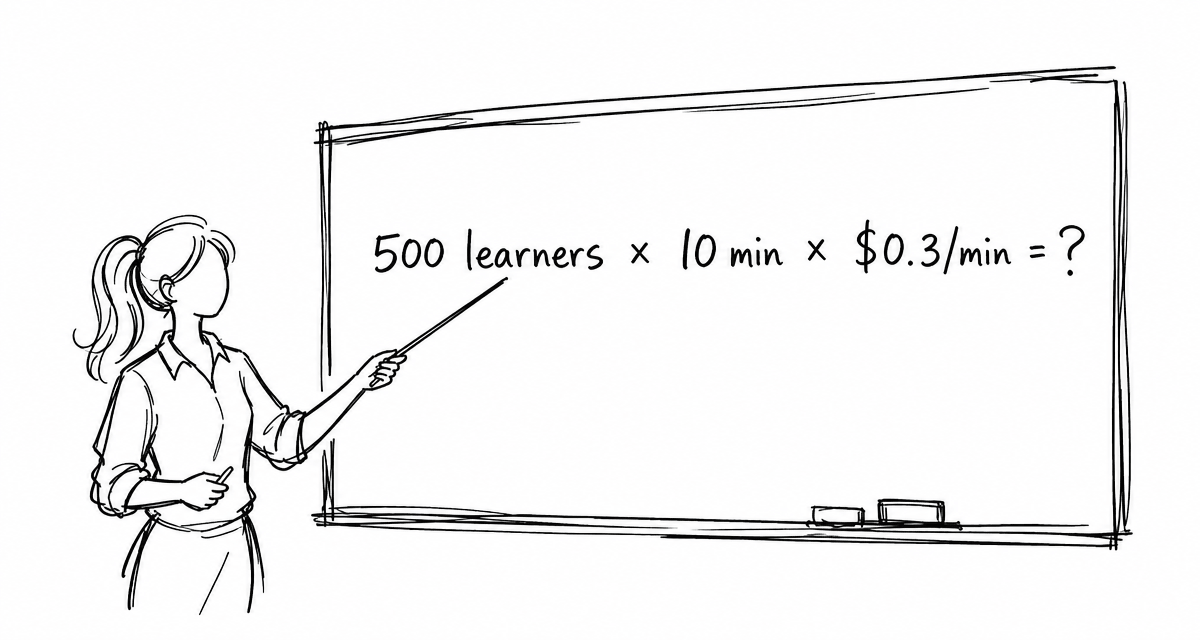
The table below compares estimated monthly costs at three usage levels, assuming each user interaction averages 2 minutes of avatar speaking time (consistent with the methodology used in our earlier comparison study).
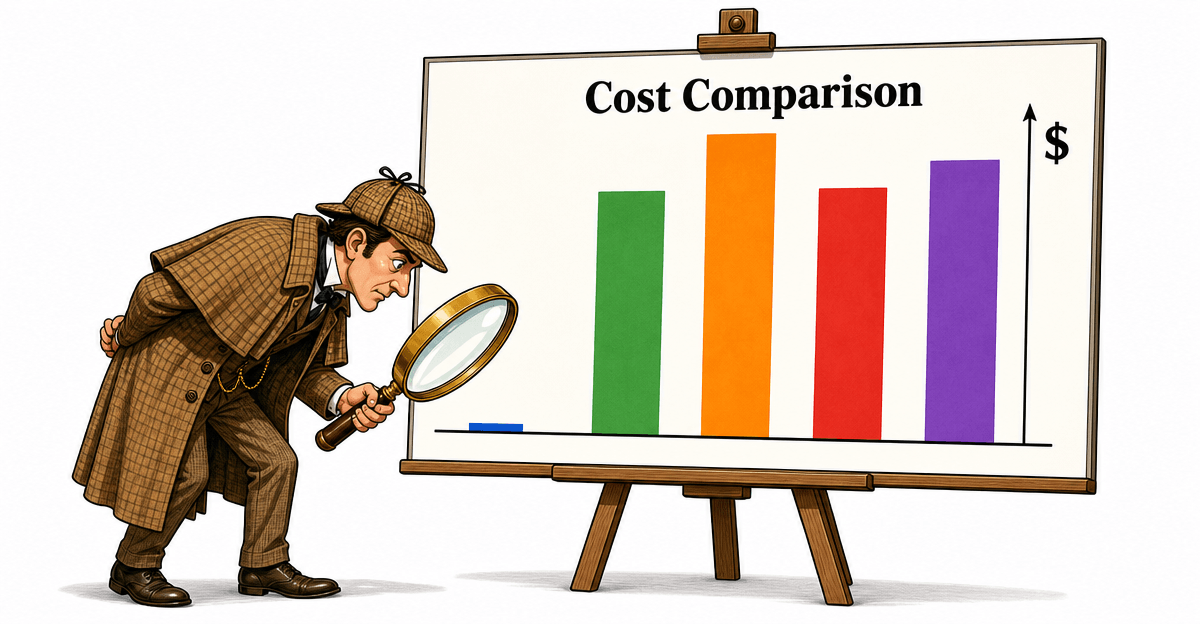
Cost Comparison by Usage Level
| Streaming Video Min/Mo | SitePal | HeyGen LiveAvatar | D-ID Agents | Soul Machines |
|---|---|---|---|---|
| 2,500 | $20 ¹ | $475 ² | ~$875 ³ | $2,430 ⁴ |
| 10,000 | $38 ¹ | ~$1,000 ⁵ | ~$3,500 ⁶ | $2,430 ⁴ |
| 60,000 | $217 ¹ | ~$6,000 ⁷ | ~$21,000 ⁸ | ~$14,580 ⁹ |
Notes:
All prices preceded by a tilde (~) are extrapolated from a lower usage pricing tier because the respective products do not list prices for that volume. Negotiated enterprise agreements would likely include volume discounts. However, we did not have access to those rates and used the best method available to us — each provider’s best published per-minute rate.
¹ SitePal: 2,500 min ≈ 7,500 streams → Silver plan (8,000 streams included). 10,000 min ≈ 30,000 streams → Gold plan. 60,000 min → Platinum plan (unlimited streams). All with annual billing.
² HeyGen LiveAvatar in Lite mode (you provide your own LLM and TTS). Business plan ($475/mo) includes 5,000 min in Lite mode — covers 2,500.
³ D-ID Agents: Scale plan ($138.60/mo) includes 400 streaming minutes. At the published Scale rate of $0.35/min, 2,500 min would cost approximately $875. (Build plan monthly price rounded from $14.40; Scale plan rounded from $138.60.)
⁴ Soul Machines: Pro plan ($29,160/year = $2,430/mo) includes 10,000 interactive minutes per month.
⁵ HeyGen: Business plan covers 5,000 min. Additional minutes at $0.095/min would bring the estimated total to approximately $1,000/mo.
⁶ D-ID: At published Scale rate of $0.35/min. Enterprise pricing would apply at this volume.
⁷ HeyGen: Estimated at published Lite rate of $0.10/min. Enterprise pricing would apply at this volume.
⁸ D-ID: Estimated at published Scale rate of $0.35/min. Enterprise pricing would apply and may be lower.
⁹ Soul Machines: Estimated at published Pro rate of $0.24/min. Enterprise pricing would apply at this volume.
For volumes beyond published plan limits, costs are estimated using each provider’s best published per-minute rate. Enterprise agreements typically involve negotiated pricing that may differ from these estimates. Volume discounts may reduce the per-minute rate, but cannot eliminate the cost premium of real-time server-side video generation.
What’s the Tradeoff?
There are genuine tradeoffs worth understanding.
Visual style differs. HeyGen, D-ID, and Soul Machines produce photorealistic video avatars. SitePal uses animated 3D avatars rendered in the browser. If photorealistic appearance is a requirement, these platforms deliver it.
Use case fit differs. SitePal is built for interactive, real-time website conversations. HeyGen’s LiveAvatar and D-ID’s Agents also serve this use case with photorealistic video. Soul Machines targets enterprise deployments with emotionally responsive digital humans.
What you’re paying for differs. With server-side platforms, the cost reflects GPU compute on every interaction. With SitePal, you’re paying a flat subscription because the rendering happens on the visitor’s device. The economics follow the architecture.
The value of each interaction differs. Not every avatar conversation carries the same business value. A visitor asking a quick FAQ is a different scenario from a qualified enterprise prospect in a guided sales consultation. The willingness to spend $0.10–$0.35 per minute depends on what that interaction is worth. When a single conversation can influence a decision worth thousands of dollars, the cost of a photorealistic video avatar may be easily justified. When you’re serving thousands of visitors with routine guidance, support, or training — where the per-interaction value is modest — the math changes.
Which Approach Makes Sense for You?
Matching the right technology to your use case matters more than choosing the “best” platform in the abstract.
Where photorealistic server-side avatars may be worth the cost:
- High-stakes, high-value interactions — a virtual sales consultation with a qualified enterprise prospect, a premium advisory session guiding a client through a significant financial decision, or a concierge service providing personalized follow-up. In these settings the conversation may influence thousands of dollars in value, the audience is typically one person, and photorealistic presence may meaningfully affect trust and outcome.
- Low-volume, high-impact deployments — internal executive communications, specialized training for small groups, or prestige brand experiences where realism is part of the message.
Where SitePal’s client-side approach makes more sense:
- High-volume, everyday interactions — an FAQ assistant on a busy website, a learning module in an online course, a customer onboarding flow, or a help guide in an employee training program. The audience is hundreds or thousands of users, the per-interaction value is modest, and cost at scale is often the deciding factor.
- Cost-predictable deployments — when you need a flat monthly rate regardless of how many visitors interact with the avatar, or how long each conversation runs.
- Multi-site and multi-page deployments — when avatars are embedded across many pages, domains, or properties, and usage is distributed and difficult to predict.
As we noted in our earlier study, server-side photorealistic avatars are a premium product — well suited for a narrow class of high-value, low-volume interactions where visual realism genuinely moves the needle. Client-side animated avatars are a scalable infrastructure product — suited for the broad range of deployments where reach, reliability, and cost efficiency matter most.
The Bottom Line
The cost difference between server-side video avatars and client-side animated avatars follows directly from the architecture. Generating photorealistic real-time video requires GPU compute for every second of every interaction. Rendering an animated avatar in the visitor’s browser does not.
At 2,500 streaming minutes per month, SitePal costs $20. The most affordable server-side alternative starts at $475. At 10,000 minutes, SitePal is $38 versus $1,000 or more. At 60,000 minutes, SitePal’s Platinum plan costs $217 — estimated server-side costs at that volume range from $6,000 to over $20,000.
That is not a commentary on the quality of any platform’s technology. Photorealistic avatars represent impressive engineering, and for the right use cases — high-value, low-volume interactions — they can deliver real returns.
But many deployments don’t look like that. Customer service, e-learning, product guidance, onboarding, website assistance — scenarios where you’re serving many visitors, each interaction is valuable but not extraordinary. In those cases, cost at scale determines whether the deployment is feasible.
The numbers are worth reviewing before you commit.
All pricing data retrieved from each platform’s published pricing pages in June 2026. Prices shown reflect annual billing where available. Visit heygen.com/pricing, d-id.com/pricing, soulmachines.com/studio-pricing, and sitepal.com/pricing for current rates.